Showing posts with label event photography. Show all posts

Tuesday, September 28, 2010

Photographing for Dollars: Sports Photography

Stumble It!


In photography there are certain ways to assure an income. One thing to keep in mind, though - you have to be good. Event photography brings immediate results.

The selling scenario:

A simple formula to follow is if there is avid interest in an activity and you can capture things that stir people's emotional ties, those photos will sell. This is how I do this:

I go to an event such as a Natural Bridge Speedway race. I take pictures. People become curious about the guy with the camera. After the race, I send an email to the owner of the track, and tell them what I am up to. Plus I give them a link to a book I made on Blurb, and hope that they are impressed.

When I go to subsequent races, I bring the books and 8x10s, which are presented nicely in a case. I make sure that I give some photos and books to the owner of the track.


Now, I have their blessings to sell, but I still keep a low profile and let people approach me. Everything sells like hotcakes. I keep my prices low, like ten for an 8x10, and twenty for a book.

A small profit margin, but sales are repeated over and over.


This sounds simple enough, but you need to use tact, and be graceful. And be sure to thank the owner of the event for this special opportunity.

If this is all that happens, you will make some income. However, there are other possibilities.

Start thinking in a larger perspective. Could your photos be used for event promotions? And think of the countless products that could be made and sold through the event owners, or even the participants. Be creative and think out of the box, and even more income could come your way.

Now, this is a small-time operation that is run on a dime. Some people specialize in event photography and have the photos developed on the spot. Operations like this one have really capitalized on event photography.

Personally, I could not develop on the spot. Each photo takes time for me to process and I am very particular in getting the image enhanced just like I like it, but developing on the spot would definitely increase sales.

Thursday, June 18, 2009

Top Ten Essentials for Event Photography


For the last two years, I have been doing dirt race track photography. And it has been a successful sideline. If you would like to get into event photography there are some essential steps that I have learned from experience.

1. Do your research: Pick an event that you know you will enjoy. The ideal event will be re-occurring on a weekly basis. You will want to be a fixture at the event coming each week.

Make sure you are welcome, talk to the owners/mangers and tell them you would like to help support their event. Show them samples of your work so they know what you can do. And by all means have your own style to separate yourself from other photographers.

2. Have the right equipment: I use a Nikon D80 and several vr lenses.

Beyond the camera equipment you may need a Step Stool, a folding table, and a way to display and carry your photos. And a notebook and a pen to keep track of orders.

Drinks, food and a good hat I have found all necessary for long intensive shoots. You may be standing in the sun all day and these essentials are a necessity. And have some camera rain protectorsand plastic bags just in case you need to cover things up.

3. Develop a methodology: If you have to carry everything figure out the best way to make things easier for you. For instance I use reusable shopping bags to combine all the small items, a back pack for my camera gear, and bungee cords to tie together my step stool and aluminum table.

Realize your day is going to cover two functions shooting pictures and selling. Figure a good times for both these activities. A lot of my selling happens a couple of hours before the event begins.

Scope out the best place for sales. Near restrooms and near concession stands are two prime locations for sales. If at all possible have an assistant to help you. I have found that indispensable. Event photography is hard work I take at least a 15 gig card an event. And many times more.

4. Maximize your sales: Most of my sales happen at the event itself. I shoot one week and have the pictures available the following week.

As you get to know the participants and fans you will get requests for pictures. I always print spec photos (8x10s) and keep them in notebooks and keep them displayed through the event.

I use plastic sheet protectorsand when I make a sale include the protector in the sale. You want to keep your prices reasonable and you will get repeat sales week to week.

5. Miminize costs: I do most of printing locally. It took me awhile to find a printer that was reasonable and good. I use the profits from the previous week to print the following week.

6. Have an online gallery: This can help you have added sales directly online. Mostly the participants tell me I saw that picture online and I want it. This has really been a boon for business. I also have two sites that promote the event itself.

On one, I feature many of the photo products that I can do with their favorite photos. Not only do the event managers like this, but it has increased my sales of other photo products. Take a look at my video blog and take a careful view of the left sidebar.

You will quickly see how I capitalize on sales. I also have a YouTube site that links directly back to my gallery.

7. Treat the event staff well: There is nothing like building good will. I often give freebies to the event staff and the owners. After all, if it was not for them the event would not be happening at all. Do all you can to be a positive asset to the event itself.

8. Build relationships: The more relationships you build the more successful you will be overall. Perhaps one way of thinking about this is like building incoming links to a web page. The more incoming links the more opportunities you will have. And perhaps even beyond the event for other photo shooting opportunities.

9. Schedule time for photo processing: I usually spend a full 8 hours or longer processing photos before the next event. Photo processing is something I do not rush through. Plan ahead and get your work done.

10. Consider what you can do better: Would a Portable Printerimprove your sales? Do you treat everyone with the respect they deserve? Keep asking yourself how you can refine your craft.

Related Posts:

Ten ways to sell your art and photography

Ten Top ways photographs sell

Thursday, June 4, 2009

Ten Top Reasons Photographs Say WOW


Beyond all the rules of photographic is the intangible WOW. WOW happens at lightening speed in the viewer's mind. They know WOW and perhaps they can not explain why they were WOWed.

So how can the photographer achieve WOW in the viewer's mind? To reach this intangible are some tangible hints.

1. The medium is the message: Marshall McLuhan theorizes on the effect of media on the mind. In the Wikipedia explanation is a good start in understanding the relationship of the viewer's mind in response to media. And of course photography is a medium.

2. Tonal quality: Tonal quality can add sensual undertones. These can be over stated or under stated. And, I suppose this relates to style. Even in Black and White photography the tones of transition can have a deep effect on the viewer mind. In color photography, I try to achieve a pleasing smoothness to acquire that eye candy feel. Other photographers delve into harsher tone transitions. The real point is to offer something unique that is not found in snap photography. Tonal quality is an evolving process for me, and it has been part of the evolution of my style.

3. Style: Style is the fingerprint that an artistic photographer places on his photograph. Style can be achieved from the compositional elements, the post processing techniques and even the camera settings, or the kind of camera a photographer uses.

All of these elements really have a bearing on style. And each good photographer develops his unique approach. Many photographers try to emulate work.

Imitation may be the best flattery, but learning from others then evoking your own style should be your goal. Style is a process that grows with the photographer. As I look through my photographs, I definitely see a progression. I have posted most of my work on Flickr and a time line of development can be noticed.

4. Atmosphere: What photographs are likely to send a viewer into orbit?

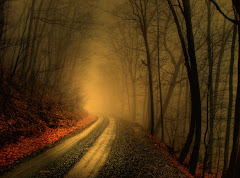
I have found that atmosphere can be a deciding quality. A foggy scenes taken in the woods, a mountain landscape or a river scene adds immensely to the visual appeal of the viewer. I look for these atmospheric events to add accent to my photographs. I know when nature interacts it positively affects the WOW.

5. Interaction: When people or animals interact in your photographs you tell a story.

You have one frame to tell a story. Your subject can interact with others or even the viewer. A one frame story does not have to be the whole story. If it leaves something unsaid the better. Letting the viewers interact with their own musings is the ultimate in making a photograph interactive.

6. A sense of mystery: We always enjoy the imponderables. If our photographs can inspire a viewer to reflect we will hook the viewer.

I really can just can't tell you how to do a photograph with a sense of mystery. I can give you a hint. It is all in how the photograph leads the eye. If you can lead the eye into a deeper more provoking space you may achieve the sense of mystery.

7. A sense of disbelief: In good novels an author who can suspend the sense of disbelief can consume the reader.

The same is true for the artistic photographer. No photograph is an exact representation of reality, even snap shots. Reality is changed from three dimensions to two. Colors light and contrast are different from what reality presents. How effectively a photographer makes this transition depends on his ability to suspend the viewer's sense of disbelief.

8. Thematic Photography: Thematic photography helps a photographer develop his specialty and evoke style.

Thematic photography can broadly span the photography a person does. Nature, politics, sports, journalism and even wedding photography can promote certain styles.

Personally, I present two themes in my photography. I find it interesting that each have evolved separately. My style in nature photography is different than my race car photography. Themes help build a photographer's evolution in creating style and his own personal WOW factor.

9. Conceptual Photography: The idea here is to covey a concept.

As a nature photographer I am constantly emphasizing the importance of nature. Photographs are subliminal messages.

Other photographers have other messages in the photographs. I do not always agree with their message, but I appreciate the style and delivery. Every time you can inspire a viewer to think you are tapping into the WOW factor.

10. Originality: Perhaps you have gleamed from my last nine points an emphasis on originality.

If your photographs fall into a general commonality with others you are not exploiting the WOW factor.

Photoshop tutorials tend to lend to that commonality. And while I do suggest you explore these, you might try striking out on your own plowing new ground of creativeness. After all, only if you are different will you truly tap into the WOW factor of your viewers.

Sunday, May 31, 2009

Ten Top Reasons Photographs Sell


As a photographer you can have some of the most beautiful and dramatic photographs. Yet, sales may be slim or not at all. So you may ask yourself, why am I not making sales?

Here are some answers that I have learned through experience.

1. Emotion, emotive, and sentiment: Ask yourself, do your photographs inspire the viewer to connect? The above photograph is named memory lane and has been a good seller for me.

I captioned this photo with a Saul Bellow quote: "Everybody needs his memories. They keep the wolf of insignificance from the door. "


While the title and the quote help set the scene for viewer connection, the photo itself has evoked childhood memories from many.

I have had some viewers and buyers ask where this photograph was taken. They have been sure they have been there, sitting on the wall drinking a soda as a child.

Oddly, they have only visited this place in their memories. I have a color version of this photograph. Although, I think it is a great photo and perhaps better, it does not inspire the same sentiment.
The quotation I used with the color version:

"She glances at the photo, and the pilot light of memory flickers in her eyes." ~Frank Deford

So I wonder, why the sepia version sells and the color version does not? My only guess is that memories are in black and white and people can connect with the sepia version better.


2. Photographs that relate directly to the viewer: Some photographers specialize. If it is Wedding photography, pet photography, or even event photography you have a ready market.

This can be the bread and butter for your craft. One sideline I do is dirt track racing photography. And, because the drivers, sponsors, and fans can directly and emotive connect, I make sales. Plus, there are tons of other perks that I enjoy.


3. Location, Location, Location: The three prime words in Real Estate Sales also applies to photography. Can take good local photographs? If so, you can develop a local market. I do this with the Blue Ridge Parkway and the city where I live, Lynchburg Virginia.

When you take photographs at your location imagine how they would look in a business. Visualizing your photographs hanging on walls is a mental exercise that I do all the time.


4. Is it worthy: Do a self appraisal of your photographs. Would you hang a large version behind your sofa?

And for that matter is one of your photographs being displayed above your sofa?

Your taste may be different from others, but these are pertinent question to ask. Can you compete in the art market place? And if not, decide how you can.

This picture is one of my best sellers and has appeared in National Magazines, such as National Geographic. And it is behind sofas of a select clientele worldwide.

5. Exposure: We are not talking about film exposure here, we are talking about your exposure. Do you do shows, do you exhibit? The more you expose you photographs the more sales you make. You can show your pictures on the Internet, but there is nothing like people seeing your photographs in person. Get out there and expose.

6. Tell your friends: People that have a connection with you are very likely to buy your photographs. There is nothing like a photograph at a friends house. They can tell their friends I know this photographer and he is great. You might even consider gifts to your friends to increase your exposure.

7. Donate your work: Promote your photography by donating your work to institutions and charities. This both lends to reputation and increases your exposure. And, besides this is a good thing to do.

8. Have a beautiful online gallery: I have opted for SmugMug for some very important reasons. I highly recommend SmugMug and I suggest you read why.

9. Show your attributions: Attributions are in essence testimonials about your photographs. I had someone else write mine, because I am shy. Attributions add meaning to your photographs, and suggest other reasons to develop interest in your photographs.

10. Be personable: As a photographer not only do you need to connect with your photographs, but as a person. Many people want a sense of who you are. Let them know you and they will be more apt to buy your photographs. Photographs are visual emotions and the more you can connect the better you will sell.

Friday, April 10, 2009

Top Ten Steps: Making a YouTube Slideshow


As a photographer who wants to gain exposure, you might have overlooked the idea of placing videos on YouTube. Here are ten easy steps to make a video slide show on YouTube. Above is my best example of what works best in a slide show.

1. Download Picasa. Picasa is not only an excellent way to organize your photos, it makes making slide shows a breeze.

2. Create an album. This is easy to do, and it does not move your files from their folders. To start just select file at the top of the page then click new album and name your album.

3. Select your pictures. This is very easy. Just right click the photos and the pop up menu will have add to album. Click on the album name and instantly the photo is added to your album.

4. Know how many pictures equals the running time of your video. You can use this as a rough guide. 147 pictures will give you a running time just under ten minutes. To keep your visitors interested I would recommend a running time of no longer than five and half minutes. Just remember YouTube only allows a maximum ten minute run time. For a five minute run time I would suggest around 80 pictures.

5. Arrange your pictures. Remember that pictures can tell a story. Order your pictures in an arrangement that makes interesting transitions.

6. Let Picasa do its magic. Once your pictures are arranged just press the create a slide show. I usually stick with the standard options for this, except I find the pan and zoom transition more entertaining. Now you just have to wait for the movie to be made.

7. Get a YouTube account and upload your video. While uploading, I add in the title and description and tags etc. I set to private, until I am ready to go live. And that happens after I complete the next steps.

8. Add music. Once your video is uploaded and processed on YouTube, you can now add music. Just click the audio swap button and check the box, "Only show songs of similar length to my video." Then preview the songs that are suitable for your slide show video.

9. Go back to edit and make your video public. I wait until the audio is live.

10. Share the fun. I have set up a blog to feature my race track videos, you can also share through the variety of social network sites. And be sure to tell your friends. This is a fun way to promote your photography.

Sunday, March 29, 2009

Ten Top Cures For Photo Block

A lesson in patience

If you are not out photographing you are not refining your craft. I am amazed at the many used DSLRs out there with a very small number of shutter clicks. In a day I usually do more shots than some people put on their camera in two years. So if you are one of those who has a camera gathering dust, here are some suggestions.

1. Always take your camera with you. Having your camera handy will make you more apt to use it. And, you just might run across that 100,000 dollar shot.

2. Look at the clouds. In photography the sky is not the limit. When you find those beautiful cloudscapes look for a place to take a picture.

3. Go to Parks, Zoos, Events. I am always finding new places to shoot, and returning to places I have shot before. Not only will you have an enjoyable trip you may get some of those awe inspiring pictures.

4. Listen to the Birds. Now, this might seem crazy, but when I hear those birds sing I just have to get out with my camera and spot birds and take pictures.

5. Post a picture a day. No matter what photo sharing network you belong to make it a habit to post a picture every day. For every photo I post I take a hundred. I can take a hundred pictures in less than hour. If I am at an event it is not unusual for me to take 500 pictures in an hour. One of those is likely to inspire me to process the photo. Have a shutter and click it.

6. Take your camera to work. I know some may not be allowed to take pictures at work. But if you can do. And, on the way to from work and at lunch you might find some exciting photo opportunities.

7. Compose pictures in your head. No matter where you are or what you are doing think about how you would compose a shot. If you do not have a camera with you, compose away. And, remember always to have your camera with you.

8. Pick a theme for the day. I am a photo opportunist and shoot whatever I find. Sometimes however I go out in the day and think lets do some macros, or river shots. I use these as guides but this does not limit the subject matter that I might find interesting.

9. Take a ride out in the country. There is nothing like exploring new places. Take that road that you have never been down before. Do some serious exploring, and if you can get lost. I personally find new and interesting sights while lost.

10. Go out on bad weather days. Snow, rain, fog, all make great photo shots. Don't be a sunny day shooter. All days are prime days to take photos.

Thursday, March 19, 2009

Top Ten Things to Monetize your Photos

The eye of the tiger


1. Remember the idea emotion not emulsion. “Kodak sells film, but they don't advertise film. They advertise memories.” This thought from Theodore Parker is a good reminder of how you should approach photo sales. The more a photograph means to someone the more it is likely to sell. People connect sentiment with photos and this should not be lost to the photographer. A personal approach with all of your clients should be one of your highest priorities. Wedding and event photographers have captured this idea intently.

2. Do what ever it takes to make sure your site is personable and friendly. Some gallery sites I have seen show the pictures, but do they show your character. Let people develop a sense of you by being as sincere and honest as you can.

3. Use Twitter. If you do not have a Twitter account you should have one. Networking with potential customers can add a positive impact on your sales. Follow me if you like. Besides photographers, I try to network with possible clients and users of photography.

4. Make people aware of your reputation. This can be accomplished with an about page. It is your resume be honest and do tell them about your accomplishments. Attribution is an important factor in making sales.

5. Once you have a client continue to follow up with them. You should not do this to the point of being obnoxious but to a degree to show them you care. Sometimes I will send them a gift out of the blue, just to let them know I am still thinking about them.

6. Make cards and postcards. I find these are big sellers when you exhibit your work. It can make the difference between a flop and a success. You can capitalize on the impulse buyer who may not want to spend on a signed limited edition print. I make mine at Zazzle were sales from online offset my costs for what I offer at exhibits.


7. Folding cards and stamps. These could be particularly useful for Wedding photographers. You can make customized Wedding invitations with stamps at Zazzle.

8. Make calendars. I make calendars for both promotion and for sales. I like QOOP for their nice large linen calendars, and Zazzle for the smaller calendars I offer.

9. Tell people about the promotions that your third party sellers are offering. For the next two days Zazzle will be offering a half off promotion on posters, if you enter this coupon on check out ZAZZLEPOSTER. Zazzle offers frequent coupons that can really cut your costs. And, they are also great for your customers.

10. Enter contests. When you win contests it reflects positively on your ability as a photographer. If you do not win, look at the winners what did differently. Not only does this improve your photography it helps you to be known in wider circles.