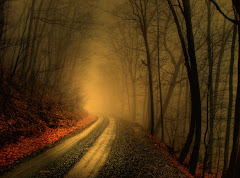
Showing posts with label composition. Show all posts

Sunday, August 9, 2009

Top Ten Ways to Improve Your Photography


Photo Mystery of Grace.
Caption: “I do not at all understand the mystery of grace - only that it meets us where we are but does not leave us where it found us.”
Anne Lamott


Are you on the top of your form and you have reached the top photographic perfection? My hat is off to you. For someone like me it is like being in the old west. There is always a faster draw and I am still learning how to slick out that gun faster.

Photography has been a continuing challenge. And it is a constant learning curve that I climb.

And I am certain that hill will always be before me. On this hill there are photographers both behind and ahead of me. But the important thing is that I continue the journey.

So having been on this sojourn for awhile I thought I might share some thoughts to my fellow travelers.

1. Its not the camera: Many of my published shots and those that have won contests have been done with a point and shoot camera. Right now I have a picture that has been accepted to a National Juried Show that was taken with a digital elph.

While like most photographer junkies, I am constantly up grading my equipment. But like a jarring stick I am constantly brought back to the reality that any and every camera can be an effective tool. The best advice I have ever heard for a camera purchase is does the camera feel right in your hands.

2. Its not the photo editing program: I have used a variety of photo editing programs and have gotten great results with all of them. I must say Adobe Photoshop is my favorite. But I have pictures that have over six million views and have won contests that have been edited in cheap programs like Microsoft Digital Image Suite and have never been touched in Photoshop.

3. Its not even the photographer: I do think if you handed a camera to a monkey and he took enough pictures that somewhere in that pile would be some great photographs. I think you could even take great photographs with your eyes shut. Revisit this post to see the evidence.

I am constantly surprised when I see cameras sold on eBay that only have a couple of thousand or less shutter actuations. I take that and more in one days shooting. If I advertised my camera for re sale on eBay it would go something like this:

A used to death Nikon D80, all the paint worn off all the buttons. Camera has been used in the rain, snow, sleet, and has been submerged under water. Like a Timex this camera has taken a beating and keeps on ticking off great pictures. Shutter life expectancy 80,000 actuations. This camera has a quarter of a million. I think it is just getting broken in. By the way, this camera is not for sale, I love it.

The point is take lots of pictures and you will end up with some great shots.

4. It is not Photoshop by the numbers: If you follow Photoshop tutorials remember that you are doing the same thing everyone else is doing. The best way to use those tutorials is to look for small things that you can add to your own style. If you follow the full tutorial realize you are using a cookie cutter approach and you photographs will be a generic feel similar to everyone who follows the tutorial.

This reminds me about paint by the numbers that was popular in the late fifties and early sixties. One clown picture really sticks in my mind that was done by millions. Oddly, this has evolved into collector art, and even a paint by number picture was hung in the White House by none other than Edgar J. Hoover.

5. It is composition: Photo composition is the primary reason photographs draw an audience. While you can have all the technique and style in the processing end, if you don't have a good or even great composition your photo might as well be decorating a dung heap. There are many ways to frame your photographs. And people have written extensively about all the techniques. You should read them, know them, and make them a part of your DNA.

Remember a photograph is only a flat piece of paper. Using composition tricks the viewer in finding depth reaching for that three dimension feel. And, if you enter the fourth dimension that portends symbols and markers for the audience to relate. You will capture the imagination of the viewer.

So how do you know your composition is working? Well, if you have made the knowledge of composition part of your DNA. You will get an actual feeling of wow before you push the shutter. Yep, you feel when you are in the zone. It is a thoughtless process and that is what works for me.

6. It is paying attention to detail:
This was and is one of my hardest and continuing lessons. My processing time for a photo is at minimum now about four hours. I try to pay close attention to each nuance of the photo. I will intently go over the photo by enlarging it to view almost each pixel. Even then, I can find flaws after the photo is processed.

I just do not tell anyone were the flaws are, but they really stand out to me. And, I do go back often to correct them.

Attention to detail in photography is paramount. Henri Cartier-Bresson touched up his photos with a one hair brush. This is what separates the wheat from shaft in photography. This tool, I have found indispensable in photo processing. If you do not have it, it should be your next purchase to improve your photos.

7. It is knowing light. Photography in the basic sense is how objects interact with light. This is what you are recording and it is the most basic element of photography. As composition should be part of your DNA, your knowledge of light should be second nature to you also. Study light and your photography will improve by quantum leaps.

8. It is knowing your black and white point: By black point I mean the very darkest part of your photograph and white is the lightest. Between those points are the gradients of change. Each point in that transition defines your photograph. Everything from tonal contrast, effective colors, to sharpness and blur are reliant on effective black and white points.

9. It is passion: It is having that driving force that compels you to take the best photograph you can. And it is the gumption to process your photograph at the highest level of your skill. It takes a certain amount of compulsive behavior to continue to aspire and push yourself harder. And you have to enjoy the push, if not find something else you are passionate about.

10. It is confidence: At some point you have to decide that you are a good photographer. And even better a great photographer. There is lots of competition and there are many great photographers. You have to elevate your self esteem, and promote yourself in that class. If you do not consider yourself a great photographer no one else will either. I generally let my pictures do my talking by carrying a portfolio.

Wednesday, June 24, 2009

Top Ten Tips to evaluate your photos


Two wolves at Yellowstone

Photo caption: “When twilight drops her curtain down and pins it with a star, remember that you have a friend though she may wander far.”
unknown

How to self critique your photograph, may be one of the most important evaluations that you can do. This can be especially important if you are photographing for others. You need to refine your eye to do a critical analysis of your photograph.

1. Begin before processing: Remember to take many pictures. And if possible from different angles and heights. Check the framing, composition and lighting. Process the picture that has the necessary material in the raw form to make an exceptional photograph.

2. Process your photograph: Use your best skills in processing a photograph. Photographer's have style. What is yours? Is it based in the tonality of the picture, light, contrast and composition? Is the photograph telling telling your audience to say wow? Just from the implementation of your style.

The way to develop style is to look at the photographs of those that are considered best. Look for their style, but do not be a mimic.

Could you recreate the styles you like? And more importantly can you use what you learn from others as an embarking point to develop your own unique work.

3. Does your photograph have depth: Photographs are two dimensions portraying three dimensions. If your photograph looks flat you automatically lose your audience.

Refine your understanding of composition by thinking in spacial terms. Good photography leads the eye through the photograph. The deeper a person can look into a photograph is directly related to the appeal of the photograph to the viewer.

Simple principles of geometry can add greatly to the feeling of depth.

4. Does your photograph tell a story: Not all good photographs tell a story. Nevertheless, if your photograph does it will help peak the interest level in your photograph.

The story need not be elaborate, but does the photograph tell you something or make you think.

5. Does you photograph have meaning: Photography is much like writing in this sense. You have to define your audience. Who is your audience?

Are you playing to a larger universal audience or more of a personal audience? Does your photograph have meaning to your audience?

6. Does your photograph capture the senses: By default photography is a visual medium. But good photography can and does engage other senses.

How does the photograph make you feel? What other senses are engaged: taste, hearing, touch. Does your photograph speak to other senses?

7. Is your photograph half baked: Did you take your photograph out of the processing oven too soon?

Enlarge your photograph and look at the small details. Are these the best they can be? If not correct your photograph. I usually magnify my photo to about 800 percent and pour over the details looking for flaws.

8. Can you be unbiased in your appraisal: Everyone is subjective including me. Realize you are not looking through the perfect prism when you evaluate your photographs.

Put your photographs up in social sharing sites like Flickr. On these sites people are generally complementary about your photographs, so a measure of best photos could be the number of views and invites you may get.

Sometimes harsh criticism is hard to find. Any you do get should be valued and looked into carefully.

9. Review your photographs again at a later date: Take a fresh look at some of your older photographs. How can they be improved?

Consider reprocessing or even deleting to have the best photographs represent your work.

10. Continually review the work of others: Study the work of others often. Surf the net and see what surfaces to the top.

See what others think are great and try to understand how it was done. Photography is a school that you never graduate it is a continual learning process.

Sunday, June 14, 2009

Ten Top Tips for Winning Photo Contests


Title: Angel Awakening
caption: If one looks closely enough, one can see angels in every piece of art. ~Adeline Cullen Ray


The above photographic montage will be entered in a contest in July. I have based my decision on this entry on the ten tips below. I am already thinking this will be a winner.

Can you win photo contests? I would think so. I have had winning entries in over 50 percent of the contests that I have entered, both locally and internationally. So are there secret keys to success? Yes, so please don't share these tips it is our secret.

This is what I do with every contest.

1. Read all the rules carefully: Be sure what you are getting yourself into. Some contest are just a sham to have your copyright. So be careful. Once you have read the rules comply. And, make sure you use the exact format the contest requires.

2. Look at the past winners: Here you can find exactly what the contest is interested in. Do you have photos of similar quality? Study the past winners for compositional elements, color, subject, and representation. Then study again. These people were not winners of a lottery. They fulfilled the expectations of the judges. And, if a contest put out by a company, or organization: How does your photo play thematically into the message or mission of the contest sponsor?

3. Look at the judges: Not always but often the judges are listed. Now, you need to search and seek out their photographs. Study their photographs carefully. Find in their photographs salient traits and style. Study carefully and you will unearth their taste. Study their bio and their writings. The more you know about who is judging you the better you will be in choosing the photograph to enter. If they write about light, composition or other photo attributes: Then these are the secret keys in unlocking their interest your submission. I would not say mimic their style, but I would say try to present what they would appreciate in a photograph.

4. Go through your photographs carefully: Set up folders of candidate photos based on you would think the judge would pick. Pick perhaps a hundred. Put all your candidates in a folder called "winners." Yes, you need to think positively. Pick out the top ten and put in another folder called "the winners."

5. Get appraisals from others: Now this is the real test. Invite some friends over for evening of photo appraisal. Go over everything you learned in researching tips two and three. Ask them to play the role of judge and show them the folder called "winners." Ask them to pick out the top ten that makes the grade. Once done, compare with your own top ten picks. How many choices were the same? Now, you should have a good idea of which photos to use in the competition.

6. Decide if you should start from scratch: Now decide if your photos really have the mustard to compete. Be honest. If the photos are not competitive you have a camera and editing tools. Armed with what you know it is time for a photo outing and get what you need.

7. Examine your selections: Put your selected photographs back into your editing program. Enlarge you photograph and check every small detail of the photograph. Decide if it can be improved. Attention to detail is an important key. You should offer the most technically correct photograph that you can. Perhaps you have learned a new technique of improvement since you last edited your photograph that you can now apply.

8. Title and caption: Taking the knowledge you have learned in tips two and three, carefully decide on a title and caption. Sometimes the decision of a title and caption for me can take longer than actually editing the photo itself. Do not take the importance of this lightly.

9. The unavoidable bell curve: Realize you are trying to push you photograph to the very best end of the bell curve. If you have followed these tips you are getting to the good end. Ninety percent of the photos submitted will be rejected quickly. You should now have a photo in the top ten percent. One little tip, is to submit early. It may be okay to submit your taxes at the last moment, but photo contests are a very different matter.

10. Be a winner: You are a winner if you followed these steps. You have improved your chances of winning the photo contest dramatically. So sit back and wait for the notification. Don't be disappointed if you lose. Look at the winner and his photos. Congratulate them in your mind. My experience is being a winner 50 percent of the time. Try again and know you are going to succeed.

Thursday, June 4, 2009

Ten Top Reasons Photographs Say WOW


Beyond all the rules of photographic is the intangible WOW. WOW happens at lightening speed in the viewer's mind. They know WOW and perhaps they can not explain why they were WOWed.

So how can the photographer achieve WOW in the viewer's mind? To reach this intangible are some tangible hints.

1. The medium is the message: Marshall McLuhan theorizes on the effect of media on the mind. In the Wikipedia explanation is a good start in understanding the relationship of the viewer's mind in response to media. And of course photography is a medium.

2. Tonal quality: Tonal quality can add sensual undertones. These can be over stated or under stated. And, I suppose this relates to style. Even in Black and White photography the tones of transition can have a deep effect on the viewer mind. In color photography, I try to achieve a pleasing smoothness to acquire that eye candy feel. Other photographers delve into harsher tone transitions. The real point is to offer something unique that is not found in snap photography. Tonal quality is an evolving process for me, and it has been part of the evolution of my style.

3. Style: Style is the fingerprint that an artistic photographer places on his photograph. Style can be achieved from the compositional elements, the post processing techniques and even the camera settings, or the kind of camera a photographer uses.

All of these elements really have a bearing on style. And each good photographer develops his unique approach. Many photographers try to emulate work.

Imitation may be the best flattery, but learning from others then evoking your own style should be your goal. Style is a process that grows with the photographer. As I look through my photographs, I definitely see a progression. I have posted most of my work on Flickr and a time line of development can be noticed.

4. Atmosphere: What photographs are likely to send a viewer into orbit?

I have found that atmosphere can be a deciding quality. A foggy scenes taken in the woods, a mountain landscape or a river scene adds immensely to the visual appeal of the viewer. I look for these atmospheric events to add accent to my photographs. I know when nature interacts it positively affects the WOW.

5. Interaction: When people or animals interact in your photographs you tell a story.

You have one frame to tell a story. Your subject can interact with others or even the viewer. A one frame story does not have to be the whole story. If it leaves something unsaid the better. Letting the viewers interact with their own musings is the ultimate in making a photograph interactive.

6. A sense of mystery: We always enjoy the imponderables. If our photographs can inspire a viewer to reflect we will hook the viewer.

I really can just can't tell you how to do a photograph with a sense of mystery. I can give you a hint. It is all in how the photograph leads the eye. If you can lead the eye into a deeper more provoking space you may achieve the sense of mystery.

7. A sense of disbelief: In good novels an author who can suspend the sense of disbelief can consume the reader.

The same is true for the artistic photographer. No photograph is an exact representation of reality, even snap shots. Reality is changed from three dimensions to two. Colors light and contrast are different from what reality presents. How effectively a photographer makes this transition depends on his ability to suspend the viewer's sense of disbelief.

8. Thematic Photography: Thematic photography helps a photographer develop his specialty and evoke style.

Thematic photography can broadly span the photography a person does. Nature, politics, sports, journalism and even wedding photography can promote certain styles.

Personally, I present two themes in my photography. I find it interesting that each have evolved separately. My style in nature photography is different than my race car photography. Themes help build a photographer's evolution in creating style and his own personal WOW factor.

9. Conceptual Photography: The idea here is to covey a concept.

As a nature photographer I am constantly emphasizing the importance of nature. Photographs are subliminal messages.

Other photographers have other messages in the photographs. I do not always agree with their message, but I appreciate the style and delivery. Every time you can inspire a viewer to think you are tapping into the WOW factor.

10. Originality: Perhaps you have gleamed from my last nine points an emphasis on originality.

If your photographs fall into a general commonality with others you are not exploiting the WOW factor.

Photoshop tutorials tend to lend to that commonality. And while I do suggest you explore these, you might try striking out on your own plowing new ground of creativeness. After all, only if you are different will you truly tap into the WOW factor of your viewers.

Monday, May 4, 2009

Top Ten Ways to Inspiration Photography

I have packed my bags and ready to go. I have also been stocking up on inspiration. And I thought, I would share my process of being inspired. This is my yoga before going on a two week photo shoot in the National Parks of the Midwest. While there are some tutorials here, most of what is offered is how to build a mind set for inspiration. Enjoy and breath in deeply.

1.


2.

3.


4.


5.
Edward Curtis who impressed me at a young age.

6.


7.
The rule of thirds debated.

8.


9.


10.

Friday, April 10, 2009

Top Ten Steps: Making a YouTube Slideshow


As a photographer who wants to gain exposure, you might have overlooked the idea of placing videos on YouTube. Here are ten easy steps to make a video slide show on YouTube. Above is my best example of what works best in a slide show.

1. Download Picasa. Picasa is not only an excellent way to organize your photos, it makes making slide shows a breeze.

2. Create an album. This is easy to do, and it does not move your files from their folders. To start just select file at the top of the page then click new album and name your album.

3. Select your pictures. This is very easy. Just right click the photos and the pop up menu will have add to album. Click on the album name and instantly the photo is added to your album.

4. Know how many pictures equals the running time of your video. You can use this as a rough guide. 147 pictures will give you a running time just under ten minutes. To keep your visitors interested I would recommend a running time of no longer than five and half minutes. Just remember YouTube only allows a maximum ten minute run time. For a five minute run time I would suggest around 80 pictures.

5. Arrange your pictures. Remember that pictures can tell a story. Order your pictures in an arrangement that makes interesting transitions.

6. Let Picasa do its magic. Once your pictures are arranged just press the create a slide show. I usually stick with the standard options for this, except I find the pan and zoom transition more entertaining. Now you just have to wait for the movie to be made.

7. Get a YouTube account and upload your video. While uploading, I add in the title and description and tags etc. I set to private, until I am ready to go live. And that happens after I complete the next steps.

8. Add music. Once your video is uploaded and processed on YouTube, you can now add music. Just click the audio swap button and check the box, "Only show songs of similar length to my video." Then preview the songs that are suitable for your slide show video.

9. Go back to edit and make your video public. I wait until the audio is live.

10. Share the fun. I have set up a blog to feature my race track videos, you can also share through the variety of social network sites. And be sure to tell your friends. This is a fun way to promote your photography.

Wednesday, March 11, 2009

Ten Top Photo and Art Mantras

This side of tranquility

Mantras of Composition as I see it. They are simple but infinitely complex.

1. The first rule of composition is look at many pictures, look at the ones you like and decide what you like about them. And look at them more and often. They are your best hints for effective composition.

2. The rule of thirds has been roughly said to be a tit tat toe box. And, you should arrange element of interest near the intersecting lines. Take the rule of thirds a little bit different in your mind lay the grid down and think foreground, mid ground, and far ground. Strong foreground elements are very effective even in large landscape depictions.

3. Think of a photograph as a way to lead the eye. To have an interesting photograph think what point does the eye fall on first, then second and third.

4. Always look for vanishing points. A vanishing point is where the photograph leads the eye to infinity. Effective vanishing points can inspire the viewer to look longer and deeper into an image.

5. Be sure to have effective contrast and lightness. Look at your photo over and over again. Simple contrast adjustments can not only increase clarity, but keep your photography from looking flat. Look at the black and white points of your composition. Ask yourself do they help lead the eye? And, effective contrast increases color tonality in your image.

6. Remember that light and darkness is what makes a photograph. In essence photographing is the capture of light. And, light will lead the eye. Look for light that creates a tunnel effect. Look for light that emphasizes light and contrast. Always think how can I use the light to the best advantage.

7. Look at the direction your composition leads the eye. Does it lead it from corner to corner, or front to back. What is the most appealing you have to decide. Take more pictures so you can also think at this at home.

8. DOF is depth of field. Narrow DOF has clarity of the focus on the object of most interest with the background or the foreground becoming unfocused. A wide DOF averages the focus over the whole image. DOF is controlled by the Aperture setting on your camera. Setting your DOF can be one of the major factors in deciding on a composition. Narrow DOF is primarily used in macro photography, but it can also be effective in landscapes. When you have a path of sharpness through a less focused area you create a path for the eye to follow.

9. Composition by color can be very effective and vivid. Look how framing colors and color differences can lead the eye. Every photograph is a journey. Think how colors complement the journey's end.

10. Remember there are no real rules. What works best in one case may not work in another. The ultimate goal is capture spirit, to evoke a feeling to inspire the viewer with thought or awe. Remember that as a mantra.