Showing posts with label canera. Show all posts

Thursday, June 4, 2009

Ten Top Reasons Photographs Say WOW


Beyond all the rules of photographic is the intangible WOW. WOW happens at lightening speed in the viewer's mind. They know WOW and perhaps they can not explain why they were WOWed.

So how can the photographer achieve WOW in the viewer's mind? To reach this intangible are some tangible hints.

1. The medium is the message: Marshall McLuhan theorizes on the effect of media on the mind. In the Wikipedia explanation is a good start in understanding the relationship of the viewer's mind in response to media. And of course photography is a medium.

2. Tonal quality: Tonal quality can add sensual undertones. These can be over stated or under stated. And, I suppose this relates to style. Even in Black and White photography the tones of transition can have a deep effect on the viewer mind. In color photography, I try to achieve a pleasing smoothness to acquire that eye candy feel. Other photographers delve into harsher tone transitions. The real point is to offer something unique that is not found in snap photography. Tonal quality is an evolving process for me, and it has been part of the evolution of my style.

3. Style: Style is the fingerprint that an artistic photographer places on his photograph. Style can be achieved from the compositional elements, the post processing techniques and even the camera settings, or the kind of camera a photographer uses.

All of these elements really have a bearing on style. And each good photographer develops his unique approach. Many photographers try to emulate work.

Imitation may be the best flattery, but learning from others then evoking your own style should be your goal. Style is a process that grows with the photographer. As I look through my photographs, I definitely see a progression. I have posted most of my work on Flickr and a time line of development can be noticed.

4. Atmosphere: What photographs are likely to send a viewer into orbit?

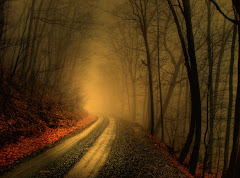
I have found that atmosphere can be a deciding quality. A foggy scenes taken in the woods, a mountain landscape or a river scene adds immensely to the visual appeal of the viewer. I look for these atmospheric events to add accent to my photographs. I know when nature interacts it positively affects the WOW.

5. Interaction: When people or animals interact in your photographs you tell a story.

You have one frame to tell a story. Your subject can interact with others or even the viewer. A one frame story does not have to be the whole story. If it leaves something unsaid the better. Letting the viewers interact with their own musings is the ultimate in making a photograph interactive.

6. A sense of mystery: We always enjoy the imponderables. If our photographs can inspire a viewer to reflect we will hook the viewer.

I really can just can't tell you how to do a photograph with a sense of mystery. I can give you a hint. It is all in how the photograph leads the eye. If you can lead the eye into a deeper more provoking space you may achieve the sense of mystery.

7. A sense of disbelief: In good novels an author who can suspend the sense of disbelief can consume the reader.

The same is true for the artistic photographer. No photograph is an exact representation of reality, even snap shots. Reality is changed from three dimensions to two. Colors light and contrast are different from what reality presents. How effectively a photographer makes this transition depends on his ability to suspend the viewer's sense of disbelief.

8. Thematic Photography: Thematic photography helps a photographer develop his specialty and evoke style.

Thematic photography can broadly span the photography a person does. Nature, politics, sports, journalism and even wedding photography can promote certain styles.

Personally, I present two themes in my photography. I find it interesting that each have evolved separately. My style in nature photography is different than my race car photography. Themes help build a photographer's evolution in creating style and his own personal WOW factor.

9. Conceptual Photography: The idea here is to covey a concept.

As a nature photographer I am constantly emphasizing the importance of nature. Photographs are subliminal messages.

Other photographers have other messages in the photographs. I do not always agree with their message, but I appreciate the style and delivery. Every time you can inspire a viewer to think you are tapping into the WOW factor.

10. Originality: Perhaps you have gleamed from my last nine points an emphasis on originality.

If your photographs fall into a general commonality with others you are not exploiting the WOW factor.

Photoshop tutorials tend to lend to that commonality. And while I do suggest you explore these, you might try striking out on your own plowing new ground of creativeness. After all, only if you are different will you truly tap into the WOW factor of your viewers.

Sunday, March 15, 2009

Top Ten Photography Myths

happy New Year!

1. The best times to photography is early morning and late evening.

False. Yes, these are exceptional times for photographing, but all daylight hours are good. It is a matter of planning of your shooting. Evenings and early mornings are great for landscape shots, but great shots can be made during other hours of the day. I usually take walks through the woods in mid day when the lighting is usually better because of the over head canopy blocks so much of the light. Later in the day and earlier lighting may be inadequate.

2. You should always shoot with the sun on the the side of your shot or behind you.

False. Sometimes shooting directly with the sun in front of you can make for some great shots. Silhouettes are best made this way. And sometimes you can catch the shimmering of light that causes a photograph to reach an ethereal quality.

3. Its best to shoot on cloudy or overcast days.

False. Any day is great for photography. It is always the ability of you to manage your shots with the light at hand. Cloudless blue skies with green landscape can make for very striking photographs. Wildlife photos with excellent detail can also be achieved on bright days. Light and shadows under trees can make for interesting compositions.

4. Its rainy or miserable outside and you think it is a bad day for photography.

False. Some of the best atmospheric shots can be made on days like this. Get your camera and go. And, just a thought; sometimes you might end up with very grainy photos and you might think of deleting them. Take a second look on your computer, some of these may turn out to be great shots after processing. The shot above was one someone would might delete because it was so grainy before processing.

5. I can't take great shots because I have a cheap camera.

False. Any camera can produce great shots. All cameras do have their particular limitations, but even with the cheapest point and cameras can produce some excellent photographs. Learn the limitations of your camera, or better yet learn the wonderful capabilities that each camera possesses. Some of my most published photos were taken with a cheap point and shoot. Even one that ended up in National Geographic.

6. Its important to have a collection of filters and polarizing lenses.

False. Many great photographs are taken without any filters at all. While polarizing filters and other filters may have their place, the first filter you should have is a UV filter to protect the lens itself. I personally like taking photographs through clear glass as much as possible.

7. My photograph is not good because a good photographer told me how bad it was.

False. While it is helpful to have have a critical appraisal of your photographs, always take criticism with a grain of salt. You decide if you like your photograph. Take criticism as a means of improvement. And, just a little secret when sometimes you do get some negativity, it can be a sign that your photograph may be really good. Some photos that I have negative comments on proved to be my most viewed photos. And without earnest criticism you will never improve.

8. I have a photographer that I admire I will never be able to take shots like him/her.

False. Be persistent and take lots of shots. Work hard on your composition, and post processing skills. Try to figure out how the photographer achieved his shots. Emulate his style and look carefully at the post processing. Sometimes the learning curve may be long, but you can reach the goal. And most importantly, it is up to you to develop your own style. Style is your fingerprint on the craft. By understanding others your own style will evolve.

9. My photographs look flat and uninteresting, I can't take a good photograph.

False. Sometimes simple adjustments to light and contrast can improve a photograph dramatically. As you develop more post processing skills, you will be able to tell what each photos needs. Sometimes the processing comes quick. Sometimes you may spend hours working on a single photograph. And remember, I make take a hundred pictures before I select one for processing. The biggest mistake I see other photographers making is that they will take one or a couple of photographs of one scene then leave. I tend to spend hours at one location finding the right nuance of light to make a photograph special.

10. I have already photographed that scene, I don't need to go back.

False. I find myself always returning to the scene of the crime. Above is one of my favorite places to photograph. I have photographed it in all seasons and in all manners of weather. I am always amazed that I can bring back something different. The photo above was taken in the middle of a rain storm. Just goes to show any time is great photography.