Showing posts with label c photography. Show all posts

Sunday, September 5, 2010

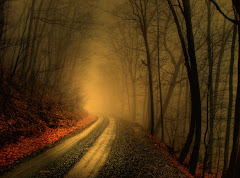
Foggy Wood Strange Journey

Foggy Wood available locally at the Framery
Foggy Wood has been my most well  received photo that I have ever taken.  On September 3rd of 2010 it went on display at the National Geographic Museum as one of the most beautiful found in its archives.  I was indeed humbled by the selection by National Geographic Resident Photographer, Annie Griffiths Belt.  Who is one of the most noted and outstanding photographers in the world.  It was also a pleasure to have her to select my photo for her book, 'Simply Beautiful Photographs'.

The photo has had a strange Journey.  It had previously been in the March 2008 edition of National Geographic.  and has won second place in the National Parks Foundation Share the Experience Contest.  Foggy Wood has also appeared as a two page spread in JPG. Magazine. It has also had an odd trip of being echoed through the internet when Smashing Magazine posted 35 Fantastic HDR pictures.  This article echoed through the internet with thousands of re-postings.

 Recently I posted this as a comment on a blog when they were discussing the pluses and pitfalls of HDR (high dynamic range) photography.  Thankfully Mary Day Long the author of Mare Cognitum did enjoy my photograph and used it as an example of artful use of High Dynamic Range.  My comment is below:

Hi and thank you for your linking to my photo Foggy Wood. I imagine the trick in the HDR process is not to become too fascinated with how out of tune your photo can become. It is a temptation for many to push that envelope and end up with the results of what you speak. Really there is no substitute for good honest photography: composition, exposure, and the right aperture are all the factors you must get right. It is much like the old saying you can't make a silk purse out of a sow's ear. I think that applies. The trick if you want to call it that is the enhancement has to be subtle and not stray away far from what the original image offered. Its very easy to do, I have done it myself more times than I can count.


But when just the right amount of spice is applied you can and may end up with a very unique and beautiful image. Foggy Wood has become a very well liked image by many. I suppose there are some who would not like it. And that is fine with me. Ultimately I pleased myself and that to me was all that mattered. It will be coming out in a National Geographic Book titled 'Simply Beautiful Photographs' Oct 19th. And it went on display along with other photographs at the National Geographic Museum exhibit Sept 3rd.


The photo has taken an interesting journey and I have enjoyed watching it find a path of its own.

 It is indeed interesting to me how this photo continues to draw interest since I first published it on Flickr on March 2nd 2007. 

It appears that it may be an enduring image, one that I could never replicate, one that perhaps as Ansel Adams would had said "God pushed the shutter button".

Monday, September 28, 2009

Top Ten Tips on Protecting your Pictures Online


Unfortunately pictures even copyrighted pictures are often taken and used by profit by those who do not have permission to do so. This has happened to me and I am sure perhaps to you. So what can you do to protect your images?

1. Be sure and copyright your images: I suggest you make sure that you use the full copyright protection. If you use Flickr you can choose full copyright when you upload your photos.

I realize that there are lesser forms of protection like creative commons. There is much discussion in favor of creative commons, but you should realize that this opens the door for free use of your photographs without regard to your wishes.

If your picture has value and you offer it free you are not only hurting yourself, but everyone else who would wish to sell their photographs by devaluing the market as a whole. '

If you want to let someone use your photo for free for whatever reason you can grant that if your picture is fully protected. With full copyright protection, you always have this option. At times I have offered my photos free to non profit organizations or for causes I support.

2. Use Photo protection: If you use photo sharing sites like Flickr use the deepest level of protection the site offers. You can do this through the options you can select in your account.

Also consider only using a medium sized image viewable to the public. While security options can be defeated, this does offer a level of protection that you should utilize.

3. Read the TOS: TOS is short for Terms of Service. Most legitimate sites where you may post your photos has a link to the TOS on the bottom of their web page.

Be sure you are not granting rights for the site to sell you photographs to the public or to their affiliates. Generally, most ethical sites will not do this.

There are exceptions, and you should be fully aware of how a site may use your photos. Be wary if you read you are granting the site a license to use the photo in whatever manner they choose.

I personally do find it acceptable if the site wants to use your photo for promotion on their website.

Also, be wary of photo contests that want full licensing or even relinquishing of the copyright if you submit a photo to their contests. Your photograph may not win the contest and you might find it being used for profit through their company or affiliates. Here is example of what happened on one of these contests by Capital One.

TOS can be confusing, but it is up to you to know what you are giving up when you enter a contest or submit a photo to a site.

4. Periodically search your for photos: This might not be 100 percent effective in finding misuse of your photos, but it is a useful tool. Google Similar Images is a beta program that allows you search for similar photos like yours, and perhaps you will find yours. There are sites that will use your images for profit without your permission and this is one way to find those sites.

UPDATE: One of the best tools for finding your photos online has been released in beta: It is called TinEye. I have used this search on one of my photos and it turned up six occasions when someone has used the photo claiming it was theirs. As TinEye moves from Beta it will offer even a larger data base for finding your photos even if they have been altered. This is really a great tool.

What I personally allow is use of my pictures of web resolution only with a link back to my original picture. Use of my photos with a link back I consider a good promotional tool.

5. One thing to do if your photos are stolen; If you find you photos where illegally taken off a sharing site like Flickr and put up for sale on another site. Contact your sharing site immediately. If it is Flickr send an abuse report.

I have found that most theft through Flickr happens through use of their API. If someone has abused the API according to their TOS they are quick to act. Other photo sharing sites would also respond quickly also.

6. Confront the abuser: This can result in varied responses. In most cases the abuser will remove your photo. Often times the abuser has acted out of ignorance and will remedy the situation to your satisfaction.

However if you do not get satisfaction, it is time to consider demanding payment or hiring a copyright attorney. To understand copyright protection here is what you need to know.

7. Do not over react: Whenever you find an image of yours being used, be sure to check if it is being used for profit by the site in question. As I stated earlier I allow people to use web resolution photos of mine if they provide a link back.

This can work in your best interest in promoting your photos for sale, by expanding the audience base. I allow this even without providing permission.

Also, when you join sharing sites or enter contests realize that limited licensing of your photos are appropriate. You must way the value to you in allowing limited use of your photos. I tend to allow this unless the licensing is far ranging.

Every grant of rigthts should be carefully considered when you read the TOS on the site. When you do find misuse of your photos I would suggest to try to talk first to resolve the issue. But if resolution is not achieved a stronger approach may be necessary.

8. Finding your photos on publications: I have at times found my photos on publications used without my permission. In each case I have successfully resolved the issue through communication with the publication and reaching a fair sum for compensation. I have yet had to file a copyright infringement suit, but if necessary I would. My rule of thumb is to talk first, but if needed do not rule out legal action.

9. Using photo sharing sites: One of the main advantages of using photo sharing sites like Flickr that the copyright notice is applied to your photograph as soon as it is published. It not only protects your photograph it provides a timeline that few can dispute. Any photo posted later by another and attempted to be copyrighted can be sucessfully disputed by which one came first.

10. Use a watermark: I use watermarks on all of the photos I post to Smugmug. I do not do this with Flickr although it could be helpful. Watermarks can be cloned out but takes some effort. On Flickr I have only low resolution pictures available that are only of web resolution.


Sunday, August 9, 2009

Top Ten Ways to Improve Your Photography


Photo Mystery of Grace.
Caption: “I do not at all understand the mystery of grace - only that it meets us where we are but does not leave us where it found us.”
Anne Lamott


Are you on the top of your form and you have reached the top photographic perfection? My hat is off to you. For someone like me it is like being in the old west. There is always a faster draw and I am still learning how to slick out that gun faster.

Photography has been a continuing challenge. And it is a constant learning curve that I climb.

And I am certain that hill will always be before me. On this hill there are photographers both behind and ahead of me. But the important thing is that I continue the journey.

So having been on this sojourn for awhile I thought I might share some thoughts to my fellow travelers.

1. Its not the camera: Many of my published shots and those that have won contests have been done with a point and shoot camera. Right now I have a picture that has been accepted to a National Juried Show that was taken with a digital elph.

While like most photographer junkies, I am constantly up grading my equipment. But like a jarring stick I am constantly brought back to the reality that any and every camera can be an effective tool. The best advice I have ever heard for a camera purchase is does the camera feel right in your hands.

2. Its not the photo editing program: I have used a variety of photo editing programs and have gotten great results with all of them. I must say Adobe Photoshop is my favorite. But I have pictures that have over six million views and have won contests that have been edited in cheap programs like Microsoft Digital Image Suite and have never been touched in Photoshop.

3. Its not even the photographer: I do think if you handed a camera to a monkey and he took enough pictures that somewhere in that pile would be some great photographs. I think you could even take great photographs with your eyes shut. Revisit this post to see the evidence.

I am constantly surprised when I see cameras sold on eBay that only have a couple of thousand or less shutter actuations. I take that and more in one days shooting. If I advertised my camera for re sale on eBay it would go something like this:

A used to death Nikon D80, all the paint worn off all the buttons. Camera has been used in the rain, snow, sleet, and has been submerged under water. Like a Timex this camera has taken a beating and keeps on ticking off great pictures. Shutter life expectancy 80,000 actuations. This camera has a quarter of a million. I think it is just getting broken in. By the way, this camera is not for sale, I love it.

The point is take lots of pictures and you will end up with some great shots.

4. It is not Photoshop by the numbers: If you follow Photoshop tutorials remember that you are doing the same thing everyone else is doing. The best way to use those tutorials is to look for small things that you can add to your own style. If you follow the full tutorial realize you are using a cookie cutter approach and you photographs will be a generic feel similar to everyone who follows the tutorial.

This reminds me about paint by the numbers that was popular in the late fifties and early sixties. One clown picture really sticks in my mind that was done by millions. Oddly, this has evolved into collector art, and even a paint by number picture was hung in the White House by none other than Edgar J. Hoover.

5. It is composition: Photo composition is the primary reason photographs draw an audience. While you can have all the technique and style in the processing end, if you don't have a good or even great composition your photo might as well be decorating a dung heap. There are many ways to frame your photographs. And people have written extensively about all the techniques. You should read them, know them, and make them a part of your DNA.

Remember a photograph is only a flat piece of paper. Using composition tricks the viewer in finding depth reaching for that three dimension feel. And, if you enter the fourth dimension that portends symbols and markers for the audience to relate. You will capture the imagination of the viewer.

So how do you know your composition is working? Well, if you have made the knowledge of composition part of your DNA. You will get an actual feeling of wow before you push the shutter. Yep, you feel when you are in the zone. It is a thoughtless process and that is what works for me.

6. It is paying attention to detail:
This was and is one of my hardest and continuing lessons. My processing time for a photo is at minimum now about four hours. I try to pay close attention to each nuance of the photo. I will intently go over the photo by enlarging it to view almost each pixel. Even then, I can find flaws after the photo is processed.

I just do not tell anyone were the flaws are, but they really stand out to me. And, I do go back often to correct them.

Attention to detail in photography is paramount. Henri Cartier-Bresson touched up his photos with a one hair brush. This is what separates the wheat from shaft in photography. This tool, I have found indispensable in photo processing. If you do not have it, it should be your next purchase to improve your photos.

7. It is knowing light. Photography in the basic sense is how objects interact with light. This is what you are recording and it is the most basic element of photography. As composition should be part of your DNA, your knowledge of light should be second nature to you also. Study light and your photography will improve by quantum leaps.

8. It is knowing your black and white point: By black point I mean the very darkest part of your photograph and white is the lightest. Between those points are the gradients of change. Each point in that transition defines your photograph. Everything from tonal contrast, effective colors, to sharpness and blur are reliant on effective black and white points.

9. It is passion: It is having that driving force that compels you to take the best photograph you can. And it is the gumption to process your photograph at the highest level of your skill. It takes a certain amount of compulsive behavior to continue to aspire and push yourself harder. And you have to enjoy the push, if not find something else you are passionate about.

10. It is confidence: At some point you have to decide that you are a good photographer. And even better a great photographer. There is lots of competition and there are many great photographers. You have to elevate your self esteem, and promote yourself in that class. If you do not consider yourself a great photographer no one else will either. I generally let my pictures do my talking by carrying a portfolio.

Friday, June 12, 2009

Ten Top Things Photogs Want to Implant in Your Mind

If photographers could control your thoughts:


1. This would look great on my wall. Right above the sofa. It's going right in my shopping cart. It is a sure thing this is going to go up in value. I think I will collect all his art.


2. I would really love this hanging on the wall behind my office desk.


3. I want to put this right on my magazine cover.


4. I think this would work great for an ad for my business. It will pop right off the page.


5. This picture would be great for my announcement. I wonder if he does cards, postcards and matching stamps?


6. My customers would love a calendar like this and it would promote my business for a year.


7. This photo would be a great book cover. I am going to make contact right away.


8. Wow this would be perfect in the movie I am making.


9. I really want this on my business card, people would be sure to keep it.


10. I could surprise my love with a card while I am away so she will think of me.

Thursday, March 26, 2009

Top Ten Camera Every Day Tricks

mandarin

Sometimes, we just think about photographing with a camera as a tool for nature,landscapes, family portraits and professional work. I thought I would share some other ways I use my camera to help myself out in life.

1. Car repairs: Or for that matter anything you take apart and put back together. I use the camera to pictures every step of the way when I take things apart. When you reassemble you have a guide and don't have to worry about which screw went where. I also use the camera to take to auto part dealers to show them the part I need especially if I do not know the name.

2. Reading the fine print: If you are getting old like me some of that small print is just hard to see. Take a picture of it and blow it up. I can't tell you how many microwave dinner directions I have read doing this when I have misplaced my glasses.

3. Finding that small object: Have you ever dropped a small screw and find it as difficult to find as a needle in a haystack? Use your camera to take pictures of the area that the item was lost sit down and blow up your photos searching is much easier this way.

4. Giving someone directions to your house: Send them an email with picture landmarks they can follow. This makes life easier for everyone.

5. Finding things in dark places: Use your camera as a third eye and utilize the flash. Under couches, and in hard places to look. It is much easier to use your camera than crouching down for a look see.

6. Telling someone how to fix the computer: You are at home talking to your friend, and they just can't get what you are trying to tell them what to do. Take a series of pictures and email them how.

7. Borrowing something from someone: Have you ever returned something and someone said it was damaged. Take some pictures of the item before you borrow or rent it, being able to show what condition the item was when you borrowed it can be your best defense.

8. Car accidents: If you unfortunately have a car accident. Be sure to take pictures. Not only might this prove your innocence it may also show that you did not do damage that could have happened later.

9. Your wallet: Take pictures of all the documents you keep in your wallet. If you ever lose your wallet you will know everything that you lost. And it could help you in canceling credit cards and replacing valuable information.

10. Documenting injuries: Sometimes bad things happen to good people. It can be important to document injuries that happened in accidents or other situations. Since injuries heal, it is good to have a photographic record.