Showing posts with label camera reiews. Show all posts

Friday, August 28, 2009

Top Ten easiest ways to understand F stop


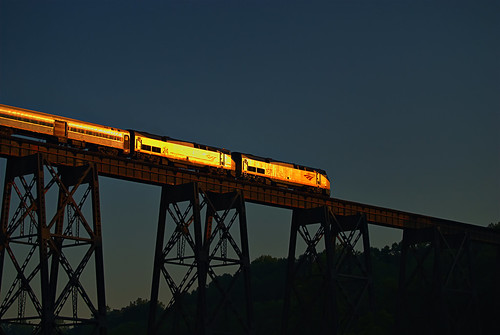
Photo Taken with a 55-200mm Nikon vr lens.


F Stop maybe the singular least understood term in photography. And when I have even talked to some accomplished photographers their eyes have glazed over at the mere mention of the term.

What makes F Stop hard to grasp to many is that the higher the F Stop the less light enters the lens.

Now, if that is not confusing enough the term F stop is loosely used as a measure in ISO and shutter speed.

1. The Video: To grasp all of this may seem daunting, but I hope by the time you reach the end of this post you will have a firm basic understanding. Lets start with this short video that will visually give you a quick jump start on the concept of F Stop.


2. A little more depth: Well, the video gives you a quick overview of what F Stop is. And you see how they are using F stops in the understanding of shutter speed and ISO.

To be more technically correct they should just be saying stops.

The official definition of F Stop is:

In optics, the f-number (sometimes called focal ratio, f-ratio, or relative aperture) of an optical system expresses the diameter of the entrance pupil in terms of the focal length of the lens; in simpler terms, the f-number is the focal length divided by the "effective" aperture diameter.

What this amounts to for the photographer is a number on the scale which tells how much light is allowed to come in through the lens.

This is controlled either by a ring on the lens or through camera settings. It really works like your eye. The iris will contract or get larger to expose the pupil to more light.

In a photographic lens these are like leaves that make the opening for light smaller or larger. Just remember the higher the F number the smaller the hole.

(Aperture also controls dof or depth of field which is entirely another concept which deserves a post of its own).

3. Lets check our understanding: We now know that F Stop is a number that shows how much light is let in the lens by an iris diaphragm getting larger or smaller. This is true F Stop.

Larger numbers mean a smaller opening, smaller numbers mean a larger opening. We also know that Stops are also used in relation with ISO and shutter speed.

Stops are in reality is just a short hand word so one photographer can tell another "I can get another stop out of this lens." Another photographer would understand this to mean this lens can use less light and still get a good shot.

4. All things work together: In most modern cameras the user will see on the camera dial at least these settings: A S .

For our purposes in this post, these are the only two settings we will discuss.

A means aperture setting
. When the photographer uses this setting he is controlling the iris diaphragm of the lens, the camera with its on board computer controls shutter speed and tries to adjust for the best picture.

Aperture settings I have found useful in fine tuning the contrast of an image and controlling DOF (Depth of Field).

The lower the F Stop the narrower the dof.

Depth of field is the amount of distance between the nearest and farthest objects that appear in acceptably sharp focus.

S means shutter setting: The length of time the shutter is open the more light is let into the camera.

The camera computer controls everything else to get the best picture. Using the S setting you can try to eek out the fastest speed to capture action, or the slowest speed for pictures in low light.

A lens with a small number for a F Stop can use less available light to get a good picture. It is considered a faster lens for this reason.

By faster it means that you can shoot at a higher shutter speed and still get a good picture. And the camera will acquire focus quicker.

This is because most auto focus systems use points of contrast to auto focus on. If you are using a lens on the edge of its ability with available light: Contrast is harder for focus system to detect.

5. A general rule: The longer the lens the more available light is needed. The best long lenses have "Big Glass" and can be stepped down to a low F Stop. This is the ideal, but it is very expensive. It also requires a tripod (or a monopod) to keep that heavy glass steady.

6. Exceptions to the general rule: With both lens technology improvements, camera improvements and noise reduction software improvements: There are some lenses that can get great images even though they do not have that low F Stop number.

They offer a lower cost opportunity to get good images from lenses. And can be hand held with great results.

Digital cameras are also improving in handling higher ISOs. The ability of a camera to take good images at higher ISO's is arguable more important than mega pixels in camera selection.

I highly recommend the Nikon 55-200mm vr lens that I get consistently great shots and it is one of the least expensive Nikon lenses. It is quick, works great in fairly low light conditions and it produces high quality images. The image at the start of this post was taken with this lens.


And, I have been impressed with the shots photographers are getting with the Sigma 150-500 HSM lens. Even at 500mm this lens produces shots with exceptional detail.


These two lenses are great examples of how technology met the challenge of producing superb lenses at a reasonable cost.

7. F Stop as a measurement in ISO and Shutter Speed: We saw in the video how F Stop can be communicated in terms of ISO.

This is more or less is a measurement factor and should be explained as gaining or losing a stop rather than a F Stop to be more technically correct. First lets understand what ISO is:

ISO equivalence on a digital camera is the ability to increase the sensitivity of the sensor to enable faster shutter speeds and/or better performance in low light.

One Stop according to the video would be increasing the ISO from 100 to 200.

So you would gain one stop in this scenario. Since 200 ISO requires more sensor sensitivity you would be stopping down.

Likewise if you increase the time the shutter is open you would also be stopping down.

8. Other Factors: So by now you are getting things a little firmer in understanding the term stop in photography.

One stop is a measurement tool of a change in settings, and one stop equals twice as much light as the previous stop.


Another tool a photographer uses are neutral density filters that block the amount of light coming in the camera.

To get that silky texture of waterfalls many photographers prefer a slower shutter speed and the filter allows the photographer to accomplish this without blowing out the picture highlights. Other uses are controlling depth of field.

9. Buying lenses: Perhaps one of the best uses of the knowledge of F Stop is evaluating the lenses you buy. If a camera has an F Stop number in the low range. You know it will be a great performer.

10. Watch the Video again: Just to reinforce what you learned here, I highly recommend you watch the video again. I think you will understand with a greater depth of this somewhat hard concept to grasp.

Friday, July 31, 2009

Ten Top Tips on avoiding camera scams and getting the best camera deal


Are you planning to make that big step forward and upgrade your camera equipment? Do you need some practical advice in getting the best deals and safely buy online? Its a jungle out there and here is the top ten tips on taming the beasts.

1. Do not buy blindly: There are predators out there who are looking to separate you from your cash. You will see ads in the internet jungle that appear to be legitimate companies offering unbelievable deals and I suggest you don't believe. At the least they are bait and switch operations and can be even more sinister once they have your credit card information. The companies change their names and location often and you will see them in internet ads. Perhaps even on this page.

Top ways to be savvy:
Before you buy Google the name of the company and complaints.

Check the Better Business Bureau.

Take a look at Thoughts by Dave and through all his posts to help identify these predator sites. He is constantly uncovering these sites and it is worthwhile to look through all his posts.

And for your entertainment and education look at Brooklyn Camera/Electronic Dealer Store Fronts. Here you will find a guy who researches camera dealers and bikes to their place of business. He takes pictures of the stores or supposed stores. Be prepared to see the seedy side of these glitzy websites.

Buy from the true and tested companies that specialize in cameras. Adorama, Cameta, BH camera and Amazon are companies that you can trust. Consider buying from these companies through Amazon. Just look at more buying options and you may see better deals through these vendors.

2. Be wary of Grey Market cameras: If you live in the United States cameras made for other country markets and sold by resellers can offer a serious compromise in getting warranty service. For instance Nikon USA will not service grey market cameras or provide firmware updates.

Generally you can identify a Nikon Grey Market camera by the first digit of the serial number.

3 means Nikon USA.

While grey market cameras might be made exactly the same as Nikon USA models, I have heard rumors that the Asian Nikon D300 is not encased in magnesium but polycarbonate.

Serial numbers beginning with:
2 - Japan
3 - USA
4 - Europe (excluding UK)
5 - Canada
6 - Australia / New Zealand(?)
7 - Asia (excluding Japan)
8 - UK


3. Getting the best Deal refurbished:

Buy refurbished: This is one of the best ways to buy a camera, generally you will have to look hard to tell it was refurbished at all.

I buy Nikon and if I buy a refurbished camera I am confident that the camera has been cleaned, re-calibrated and brought up to standards by Nikon.

I personally consider this a better option than buying new. They check these cameras more intensely than the ones coming off the assembly lines.

Cameras that are refurbished come with a 90 day Nikon warranty. Unless you buy through Cameta that offers a full year warranty. I really recommend buying through Cameta I have only had great experiences with them. Cameta has internet store fronts on Amazon and eBay. Check both.

4. Buy Used: Go carefully into this dark night. You can buy used on eBay and on Amazon I would suggest Ebay.

Use due diligence by making sure your product is not grey market by following the previous advice.

Buy through Pay Pal to assure that the product is not misrepresented or a scam.

Look carefully at the pictures and if they are stock photos be more cautious. Look for missing items that you may need to purchase.

Read the item description carefully to identify any hidden surprises. Look for the number of camera actuations that can be discovered by using a program from Opanda.

Check the sellers rating.

Check the other products the seller is selling.

Be wary if the seller like this: "quantity ten used cameras." Or if they offer free shipping on other items which are cheap large and heavy.

I have seen one seller selling ten new cameras and grandfather clocks at a cheap price and free shipping. eBay removed him from their listing because it was an obvious scam.

Ask the seller a question just to make sure how responsive he will be after the sale.

Bid in the last minutes of the auction to avoid driving up the price.

5. Use Bing Shopping: Bing shopping is an innovation by Microsoft Live and can offer you savings on eBay shopping at about 8 percent. These are generally for buy now items, and can give you serious cash back when you buy refurbished from companies like Cameta.

6. Consider buying broken cameras: Now this might seem like strange advice if you are not familiar with camera repair.

Yet, most people will shy away from buying a broken camera and the price can be seriously lower than cameras in mint condition.

Now this can be a crap shoot, but repair companies like Precision Camera do a really good job on camera repairs quickly and bring your camera up to manufacturer specs. I have used Precision Camera and recommend them highly. If for instance, you have a broken Nikon D300 the repair would be about 300 dollars. Another camera repair place is Teleplan. They offer repair prices cheaper than Precision but I have no experience with them.

UPDATE: You should check this before having repairs done by Teleplan.

7. Consider Sam's Club auctions: Sam's Club auctions are completely reliable and offer new products. They may not have the camera you are wanting but chances are you will get a great deal if they do. Products are new in the box. A Sam's membership is required.

8. Think before you buy: Remove the impulse trigger from your finger tip. Do your research and think carefully. Consider all of your options.

9. Look an auction over at least three separate times: Understand the seller is bound by their description. Sometimes descriptions are updated during the auction. So read carefully and look at the pictures intently.

If I am seriously considering buying I may even copy the picture and blow it up to see all the fine details I can detect.

10. Good luck with your purchase: If you do your research well you should end up with a great product perhaps at a considerable saving.

One final hint if you are buying used is to look at the paint wear on the camera buttons. If the wear is noticible consider that this may be a camera on its last legs.


Friday, March 6, 2009

Top Ten Sources for Photography

fluid and volatile

A list of my top ten photo resources that I use all the time.

1.
Cameta Camera: This is my favorite site for buying camera equipment. Check their eBay store for great deals on factory demos that have been refurbished. I tend to like refurbished better than new, because all the cameras are gone over with a fine tooth comb and re-calibrated. These cameras are in new condition and generally 25 to 40 percent cheaper than retail.

2. Amazon: Whenever I check out Cameta Camera I also check the prices at Amazon. Cameta is an Amazon associate and sometimes you can get the same camera from them there cheaper than you can get one at auction. I like their customer reviews for the best unbiased opinions, but still take them with a grain of salt.

3. Adorama: A great place to shop for camera accessories and for photo presentations supplies. Prices are reasonable and they have a large inventory of everything imaginable about cameras, printing, accessories, lighting and presentation supplies.

4. Newegg: Sometimes the best deals on point and shoot cameras can be found here. I have always had a great experience shopping Newegg for both cameras and computer equipment.

5. Mpix: One of the best places to buy prints online. If you are looking for quality prints on a variety of premium paper Mpix cannot be beat. Their price for metallic paper is exceptional.

6. Flickr camera finder: There are many camera and lens review sites and you can blurry eyed reading the reviews. You also have to think how tainted these reviews are. I use Flickr for a resource to see what is most important. The output of the camera pictures. I also do my lens research on Flickr. I search the lens itself and look at the pictures people achieve. After all, pictures tell more than a thousand words, better than any review.

7. Zazzle: One of the best places to make, buy, and sell photo products. The quality is superb and they have a quick turnaround when products are ordered.

8. Blurb: Blurb makes superior photo books. Their book making software is easy to use and it is great for making books for clients and for books for sale. This would be also a great source for wedding photographers.

9. Picasa: The best free software for organizing your photos. You can quickly locate photos that may have gotten lost in the shuffle on your computer. They also offer some easy non destructive editing software and other perks.

10. Windows Live Photo Gallery: I use Windows Live Photo Gallery to get large resolution pictures to clients. It is also great to use in conjunction with Picasa. I also find their publishing tools very useful in photo uploads.